
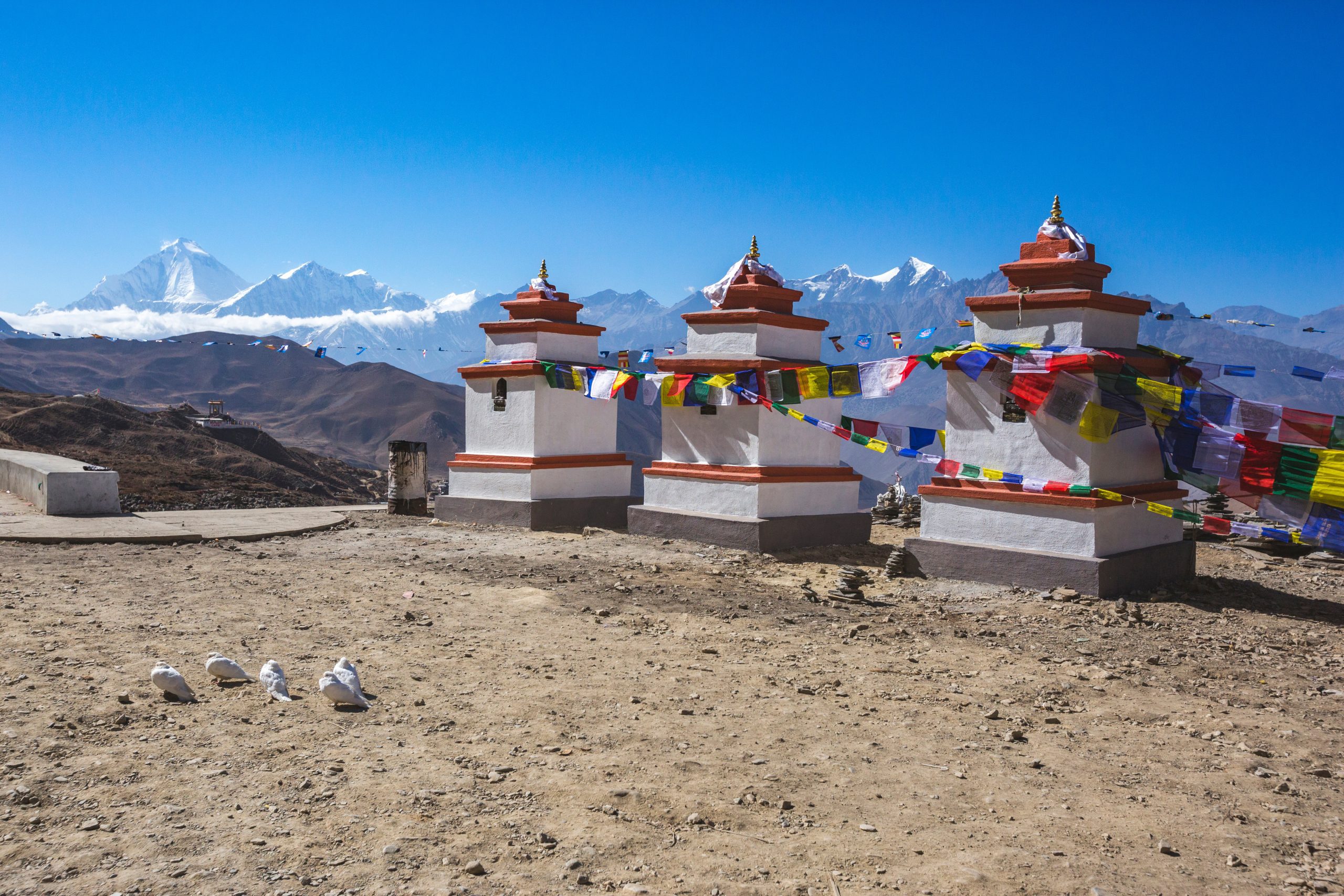
High in the Himalayas, at 3,800 meters above sea level, stands Muktinath Temple Nepal, one of the country’s most sacred sites. Revered by both Hindus and Buddhists, it is dedicated to Lord Vishnu and also holds importance in Tibetan Buddhism.
The temple’s name means “place of liberation.” Pilgrims believe visiting Muktinath Temple Nepal cleanses sins and offers salvation. Despite its remote Mustang location, devotees travel from across South Asia, often trekking for days through rugged mountain trails.
The complex appears simple but holds deep meaning. The main shrine contains a life-size statue of Vishnu. Surrounding the shrine, 108 waterspouts shaped like cow heads pour icy water. Bathing under them is believed to purify the body and soul. Nearby, an eternal flame fueled by natural gas burns beside a spring, symbolizing the union of earth, water, and fire.
Legends connect the temple to the 108 Divya Desams, the holy abodes of Vishnu. Stories also recall Guru Rinpoche, the great Buddhist teacher, meditating here. Because of this shared reverence, Muktinath Temple Nepal stands as a powerful symbol of harmony between Hindu and Buddhist traditions.
During visits, the journey often feels as important as the destination. Pilgrims climb past villages, monasteries, and fluttering prayer flags. Snow-capped peaks rise around the temple, reminding travelers of nature’s grandeur. Each step closer brings a sense of devotion and peace.
Even today, Muktinath Temple Nepal remains more than a religious monument. It is a living place of faith, unity, and resilience. Pilgrims seek blessings, while travelers admire both the temple and the Himalayan views.
Ultimately, the temple shows how belief transcends geography and hardship. By blending cultures and faiths, Muktinath Temple Nepal continues to inspire awe, devotion, and hope for generations.