

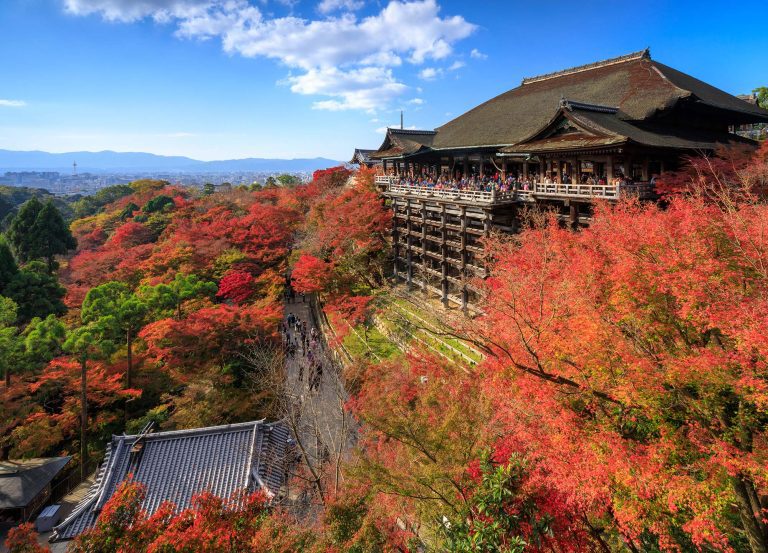
Kiyomizudera Temple is one of Kyoto’s most iconic landmarks. Perched on the hillside of Higashiyama, it offers sweeping views of the ancient city. Built in 780, the temple is dedicated to Kannon, the Goddess of Mercy, and its name means “Pure Water Temple.” Every corner of Kiyomizudera reflects Japan’s timeless artistry and spiritual grace.
To begin with, the temple’s wooden stage is its most famous feature. Supported by hundreds of tall wooden pillars, it extends over a steep valley. From here, visitors can enjoy breathtaking views of Kyoto, especially during spring and autumn. In spring, cherry blossoms surround the temple in soft pink hues. Meanwhile, in autumn, the maple trees turn fiery red and gold, creating a picture-perfect scene.
Beyond the main hall, several smaller shrines and pathways invite quiet exploration. The Otowa Waterfall, from which the temple takes its name, is a highlight. Its three streams of water are believed to bring health, longevity, and success in love. Visitors often drink from the streams using long-handled cups, hoping for good fortune. Moreover, the Jishu Shrine, dedicated to the deity of love, attracts couples and those seeking romance.
Walking through Kiyomizudera feels like traveling back in time. Wooden lanterns line the paths, and the scent of incense drifts through the air. As you wander through the temple grounds, the blend of nature and architecture creates a peaceful harmony. Additionally, local shops leading up to the temple sell traditional sweets, crafts, and souvenirs, adding a festive charm to the visit.
Furthermore, Kiyomizudera’s cultural importance has earned it UNESCO World Heritage status. Despite its age, the temple continues to symbolize Kyoto’s enduring beauty and spirit. Whether you visit at sunrise, when the city glows softly below, or at dusk, when the temple lights shimmer, the experience feels magical.
Ultimately, Kiyomizudera Temple is more than a historic site—it’s a living symbol of Japan’s soul. It invites every visitor to slow down, reflect, and feel the gentle rhythm of Kyoto’s spiritual heart.